Share agents with your team
Invite people as administrators or users and give each agent an owner. Clem, the AI admin, sets up agents and invites people when you ask in chat.
We run OpenClaw agents for your team in your own Sunport, a private AI workspace on its own virtual server. Each agent gets its own machine and browser, and your people chat with it in the dashboard, Telegram, Slack or Mattermost.
Start free or email contact@openorange.ai about custom terms for your company.
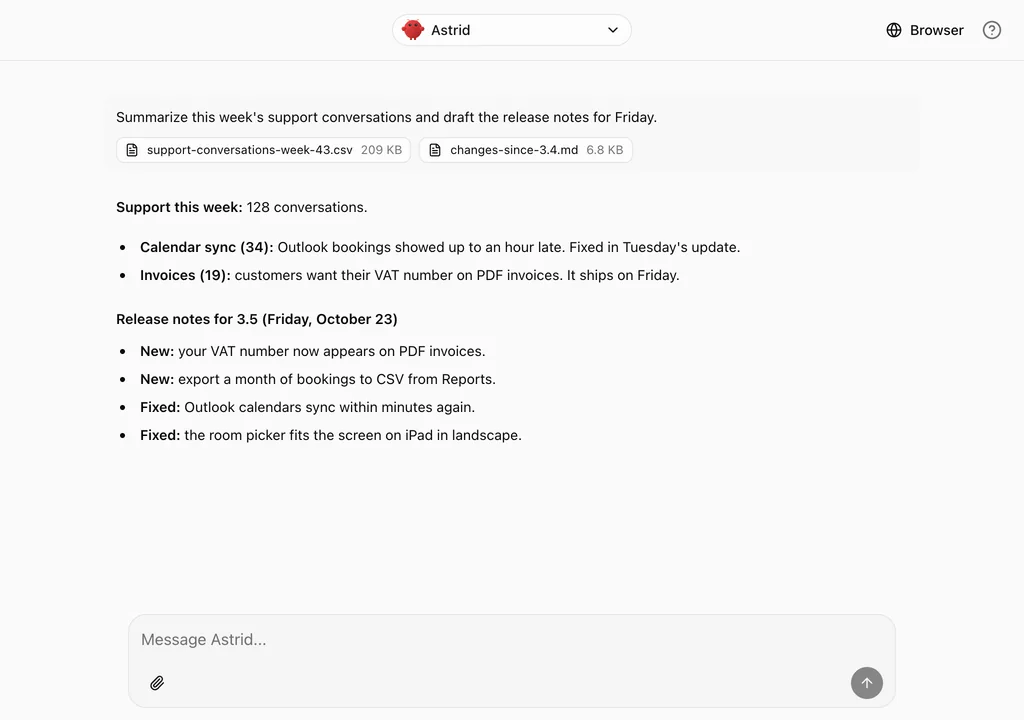
Invite people as administrators or users and give each agent an owner. Clem, the AI admin, sets up agents and invites people when you ask in chat.
Each OpenClaw agent has its own files, tools and browser. Sign it in to a website once, and it keeps that login for later work.
Pick from models by OpenAI, Anthropic, Google and more. Decide which ones each person may use and what they may spend, and give each agent a budget of its own.
Your team works with each agent in the dashboard or through its own Telegram, Slack and Mattermost bots, in direct messages and group chats.
Already run OpenClaw on your own server? One line there makes it a managed agent in your Sunport, and you can hand it back to your own setup later.
Your Sunport starts on a free trial, no card needed. After that, you pay for the models we provide from a prepaid balance, and your own keys cost nothing on OpenOrange.
Create an account and ask Clem for an OpenClaw agent, or choose New agent on the Agents page. Chat with it as soon as its machine is ready.
Questions
It’s built for a team. Agents run in your private AI workspace on its own virtual server, your people work with them in their chat apps, Clem sets things up from chat, and you set each person’s access and spending.
Yes. Create Hermes agents or coding agents such as Codex, Gemini CLI and OpenCode from the same dialog, and connect agents that run elsewhere, such as Claude or a coding agent on your laptop.
Yes. Bring keys from OpenAI, Anthropic, Google, OpenRouter and more, and OpenOrange charges nothing for those calls.
Create an account to start a free trial, or sign in to the Sunports you already have.